

How Drive lah got 28% more trips from renters who had gone quiet.
Drive lah gave every completed trip a Bundle entry. Customers who had stopped renting came back.
- Market
- Singapore, car sharing
- Campaign
- Sep 2026
- Reward
- 1 entry per completed trip
- Compared with
- Drive lah baseline
Drive lah's September 2026 campaign gave customers who had stopped renting a new reason to return. By connecting completed trips to Bundle rewards, the Singapore car-sharing platform found its strongest response among people who already knew the service but had not used it for some time.
Customers who knew Drive lah but had stopped renting
Drive lah connects people who need a car with local owners who have one to share. Customers can rent for a few hours or a few days, whether they need transport for an afternoon, a family visit or a weekend away.
That flexibility means customers use the service at different frequencies. Some rent regularly. Others book occasionally, while some stop using the platform for months at a time. For Drive lah, encouraging those existing customers to return was one of the opportunities it explored through its campaign with Bundle.
The relationship was already there. These customers had used Drive lah before. The campaign added a rewards opportunity to their next qualifying trip, giving the brand something new to bring to that relationship.
Drive lah ran the promotion across several customer groups, then reviewed their responses separately. This helped the team understand where the incentive was most effective and which audience deserved greater attention in future campaigns. The clearest result came from churned renters.
A Bundle entry for every completed trip
The campaign connected the reward to a straightforward action: complete a qualifying Drive lah trip and receive one Bundle entry.
A customer booked a car through Drive lah and completed the rental. Each qualifying completed trip earned an entry under the campaign rules, so customers could earn further entries through additional qualifying trips.
The distinction between booking and completing the trip mattered. The reward was tied to actual use of the service. Cancelled trips did not qualify.
Customers then claimed their entries through Bundle using the details associated with their invitation. Drive lah remained the business providing the rental and rewarding its customer; Bundle powered the entry and rewards experience.
This gave Drive lah a campaign it could explain through its own product. The car rental remained the reason to use the service. The entry added another reason to make that next trip with Drive lah.
How customers responded
As with any new rewards proposition, customers needed to understand what was being offered.
Dirk, Drive lah's co-founder and CEO, explained that some people initially saw Bundle as another promotion. Others needed more information about how it worked. As customers understood the rewards opportunity, he saw excitement increase.
“We saw excitement go up.”
Dirk, co-founder and CEO, Drive lah
He particularly highlighted people who had not used Drive lah for a couple of months. Although the campaign ran across several segments, he described bringing those customers back as its strongest use case. That account matched the pattern in Drive lah's performance review.
21% more churned renters returned
The churned-customer segment recorded 21% more returning guests and 30% more revenue than Drive lah estimated it would have generated without the promotion.
Those measures describe two connected outcomes. More churned customers came back to use the service, and the segment generated more revenue than expected. For Drive lah, reactivation was a specific commercial result it could identify within the campaign.
The same segment recorded 28% more trips. Drive lah cautioned that unusually long trips in the August comparison period affected trip-based measures, so the returning-customer and revenue figures provide the clearest basis for the case.
Why reviewing each customer segment mattered
Looking at the results by segment was useful because customers did not respond uniformly. A first-time renter, a regular customer and someone who had stopped renting were starting from different positions. The review allowed Drive lah to identify where it saw the strongest response instead of treating its entire customer base as one audience.
For churned renters, the campaign brought a new incentive into an existing relationship. They already knew the service, and completing another rental now carried an additional rewards opportunity.
The findings gave Drive lah a clear audience to prioritise. Its follow-up planning placed renewed emphasis on churned customers and proposed measuring their behaviour beyond the immediate campaign period. That would help the team understand whether their return led to further use of the service.
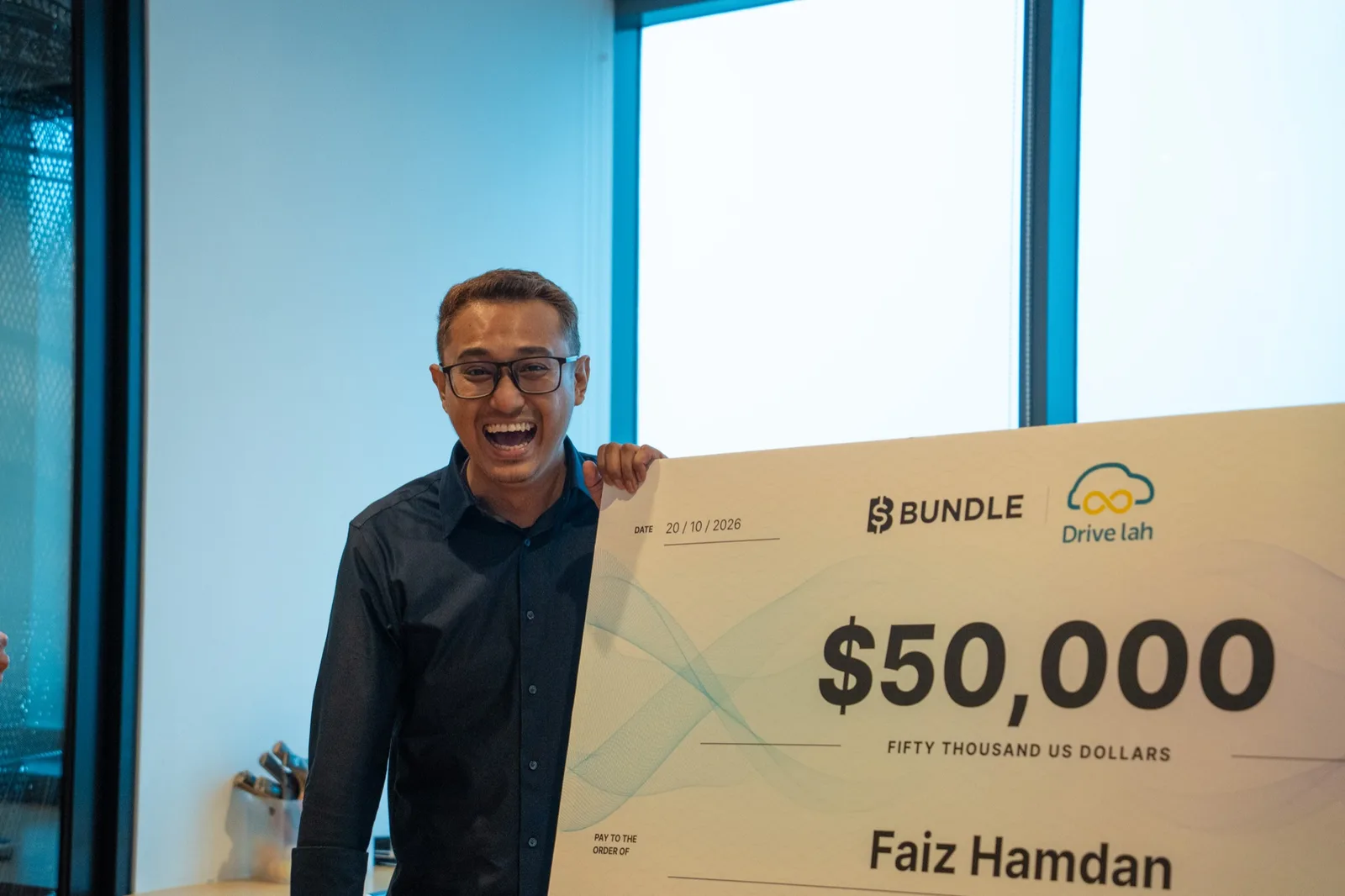
Faiz rented a car and received the Top Reward
 Watch Faiz's story
$50,000Faiz H. · Top Reward from one Drive lah trip
Before attending the Singapore rewards event, Faiz knew he had received a substantial reward, but he did not know the amount. He arrived with that question still unanswered. At the event, with Dirk beside him, the amount was revealed.
Faiz's reaction was immediate: "Crazy, crazy, crazy." He later spoke about having been sceptical before coming to the event and about what the reward would mean for his financial stability. An ordinary rental had become part of a moment he had not expected.
His experience gave Drive lah a concrete customer story behind the promotion. The sequence was easy to understand: he rented a car, completed the trip, earned an entry and received a reward. The performance review showed where Drive lah saw the strongest customer response. Faiz's experience showed what the rewards opportunity could mean to an individual taking part.
What Drive lah does next
Dirk expressed enthusiasm about participating again. He highlighted the positive customer response and the success of bringing people back, giving Drive lah a clear reason to build on what it had learned.
The next opportunity was to make that focus more deliberate: reach customers who had stopped renting, explain the reward clearly and understand what happened after they returned.
Drive lah's experience offers a practical example for businesses with customers who have drifted away. Its strongest reported results came from reconnecting with an audience it already knew. A reward linked to a completed trip gave those customers something new to consider, while the segment-level review showed the business where to concentrate its next effort.